
Licorice Extract
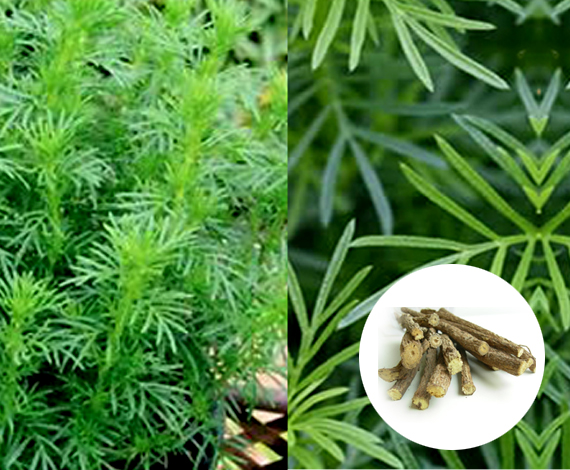
Product Name - Mulethi, Licorice, Yestimadhu Extract
Botanical Name - Glycyrrhiza glabra
Plant Part used - Root
Specification (Marker compound) - a) Glycyrrhizinic acid NLT 22% w/w
b) De-glycyrinate Licorice NMT 5%
c) Glabridin 2.5%, 4%
Description - Liquorice or mulethi is used popularly as a condiment, but it is beyond just a flavoring agent as it contains medicinal properties which have been in practice for a long time. In Ayurveda. Sushruta Samhita mentions about the medicinal properties of Liquorice. or mulethi, as it is called in Hindi, is also known in other ancient systems of medicine such as the traditional Chinese medicine, traditional Egyptian medicine, Roman medicine and Greek medicine etc.
The chemical constituents found in Liquorice include glycyrrhizin in the form of potassium and calcium salts of glycyrrhizic acid. Glycyrrhizin is known to be about 50 times sweeter than sucrose. Glycuronic acid is, however, very closely related to the hexose sugars, and glycyrrhetic acid has a haemolytic action like that of the saponins. Liqourice also contains glucose, sucrose, bitter principles, resins, mannite, asparagines and fat. Flavonoid rich fractions from Liquorice include liquirtin, isoliquertin liquiritigenin and rhamnoliquirilin and five new flavonoids- glucoliquiritin apioside, prenyllicoflavone A, shinflavanone, shinpterocarpin and 1-methoxyphaseolin from dried roots.
Therapeutic Applications:
Botanical Name - Glycyrrhiza glabra
Plant Part used - Root
Specification (Marker compound) - a) Glycyrrhizinic acid NLT 22% w/w
b) De-glycyrinate Licorice NMT 5%
c) Glabridin 2.5%, 4%
Description - Liquorice or mulethi is used popularly as a condiment, but it is beyond just a flavoring agent as it contains medicinal properties which have been in practice for a long time. In Ayurveda. Sushruta Samhita mentions about the medicinal properties of Liquorice. or mulethi, as it is called in Hindi, is also known in other ancient systems of medicine such as the traditional Chinese medicine, traditional Egyptian medicine, Roman medicine and Greek medicine etc.
The chemical constituents found in Liquorice include glycyrrhizin in the form of potassium and calcium salts of glycyrrhizic acid. Glycyrrhizin is known to be about 50 times sweeter than sucrose. Glycuronic acid is, however, very closely related to the hexose sugars, and glycyrrhetic acid has a haemolytic action like that of the saponins. Liqourice also contains glucose, sucrose, bitter principles, resins, mannite, asparagines and fat. Flavonoid rich fractions from Liquorice include liquirtin, isoliquertin liquiritigenin and rhamnoliquirilin and five new flavonoids- glucoliquiritin apioside, prenyllicoflavone A, shinflavanone, shinpterocarpin and 1-methoxyphaseolin from dried roots.
Therapeutic Applications:
- Anti-microbial activity.
- Anti-malarial activity.
- Improves immunity.
- Memory improvement.
- Anti-ulcer activity.
- Liver protection.
- Anti-Streptococcus Mutans (a tooth bacteria).
- Anti-Helicobacter Pylori (an ulcer bacteria).
- Licorice Root contains a substance called "Glabridin" which inhibits melanogenesis (the natural skin-tanning process). Used in skincare lotions.
- A remedy for coughs, bronchitis and asthma due to its carminative and expectorant properties.
Standardized Herbal Extracts - Nutracuetical
Contact Us
Srivari Natural Herbs (P) Ltd.
#999/07, 5th A Cross,
HRBR Layout, 1st Block,
Kalyanagar,
Bengaluru-560043
 +(91)-7829446065 / +(91)-9738519522
www.svnh.in Email : info@svnh.in
Disclaimer : These statements have not been evaluated by the Food and Drug Administration. These products are not intended to diagnose, treat, cure, or prevent any disease.


